Pre-launch · Not shipping yet — join the waitlist to reserve your kit
Origin // Field Notes
Built inside a working warehouse.
Not a startup pitch. A real fix for the cheap shelves we already owned — designed in CAD on a Sunday, printed in PLA, and now picking faster than the bins we replaced.
Our main business is DIY Wrap Club — we manufacture, print, and fulfill everything in-house out of our own warehouse. Easy Shelf Dividers came out of solving our own picking problem on that floor.
01
The Setup
Seven years inside an e-commerce warehouse.
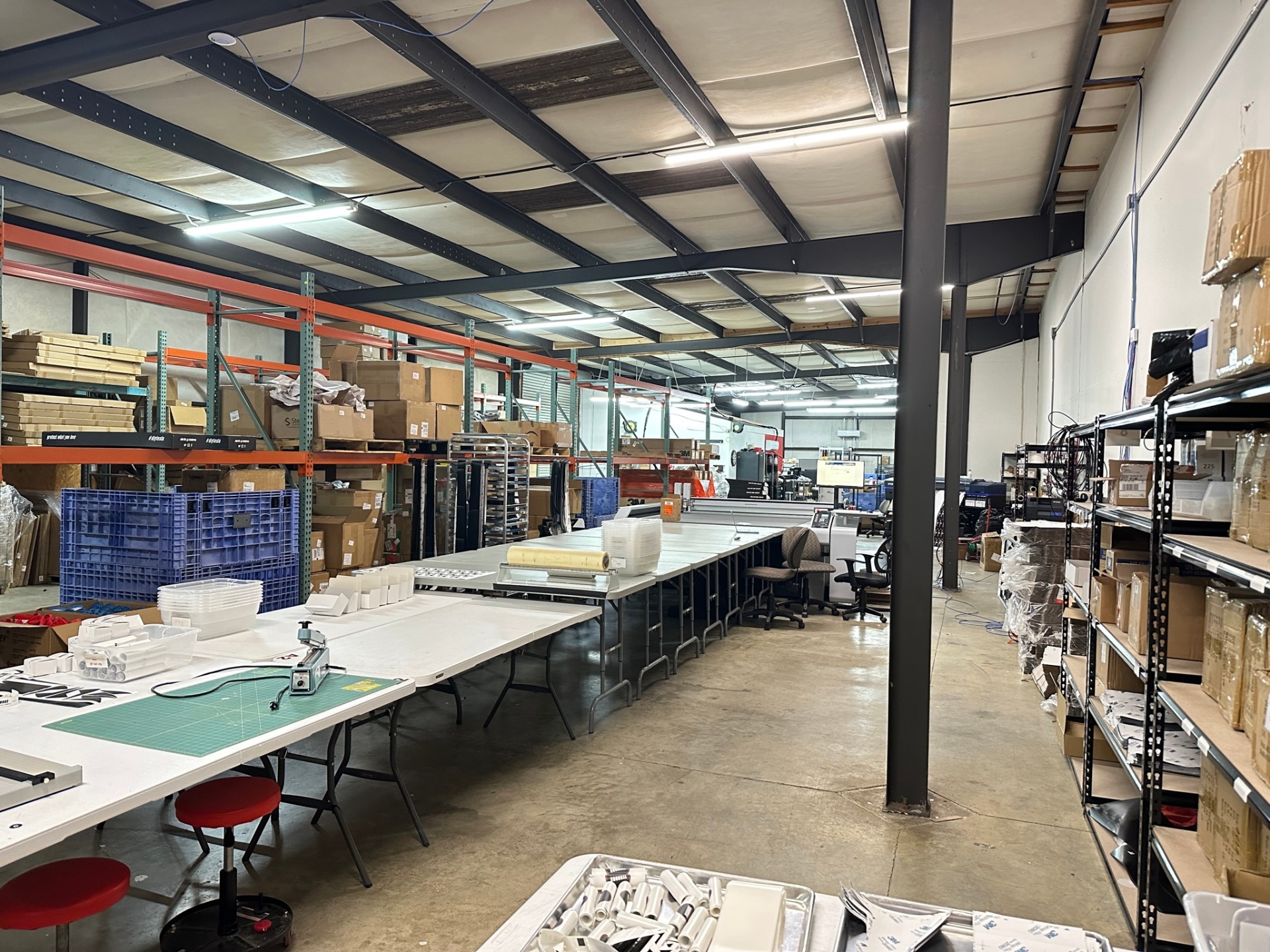
We've been running our e-commerce store — DIY Wrap Club — for the past seven years. In that time we've tried just about everything: expensive Uline bins, big industrial racks, smaller racks, mix-and-match systems. Anyone who's done this has the same story.
The thing you eventually learn: you don't have to reinvent the wheel. Watch what the big players do and copy it — or at least mimic it.
Our working warehouse — the floor where every divider design got stress-tested.
02
The Constraint
We weren't buying a new shelving system.
We already had a stack of 48×72×24 wire shelves — the cheap kind you can grab at Home Depot under names like Project Source or Muscle Rack. Over the years we'd collected three different brands of them, and that was the catch: every divider system on the market only fit one brand.
We didn't want a new rack. We wanted a divider that worked on the racks we already owned.
03
The Reference
Amazon already solved this — quietly.
Amazon uses a dynamic shelf-dividing system with an elastic strap across the front, so product doesn't fall out the top or the front, and the dividers slide as demand shifts. You can't buy it anywhere. So we designed our own in CAD.
Simple thumb-screw mechanism. A slot that accepts any 32-ECT cardboard panel. Compatible with 2×1 labels. Works on every generic wire rack we owned.
04
The Result
Wave-picking, less square footage, faster fulfillment.
Our shelves run a simple grid: shelf 1 has bins A, B, C, D, E, F, G; shelf 2 has the same; and so on. The dividers support that labeling out of the box (and any other system you want to run).
We saved a lot of space. Our inventory got more dynamic, which saved money. Our fulfillment team built a clean wave-picking flow on top of it. And because everything is modular, we just add more as we grow.
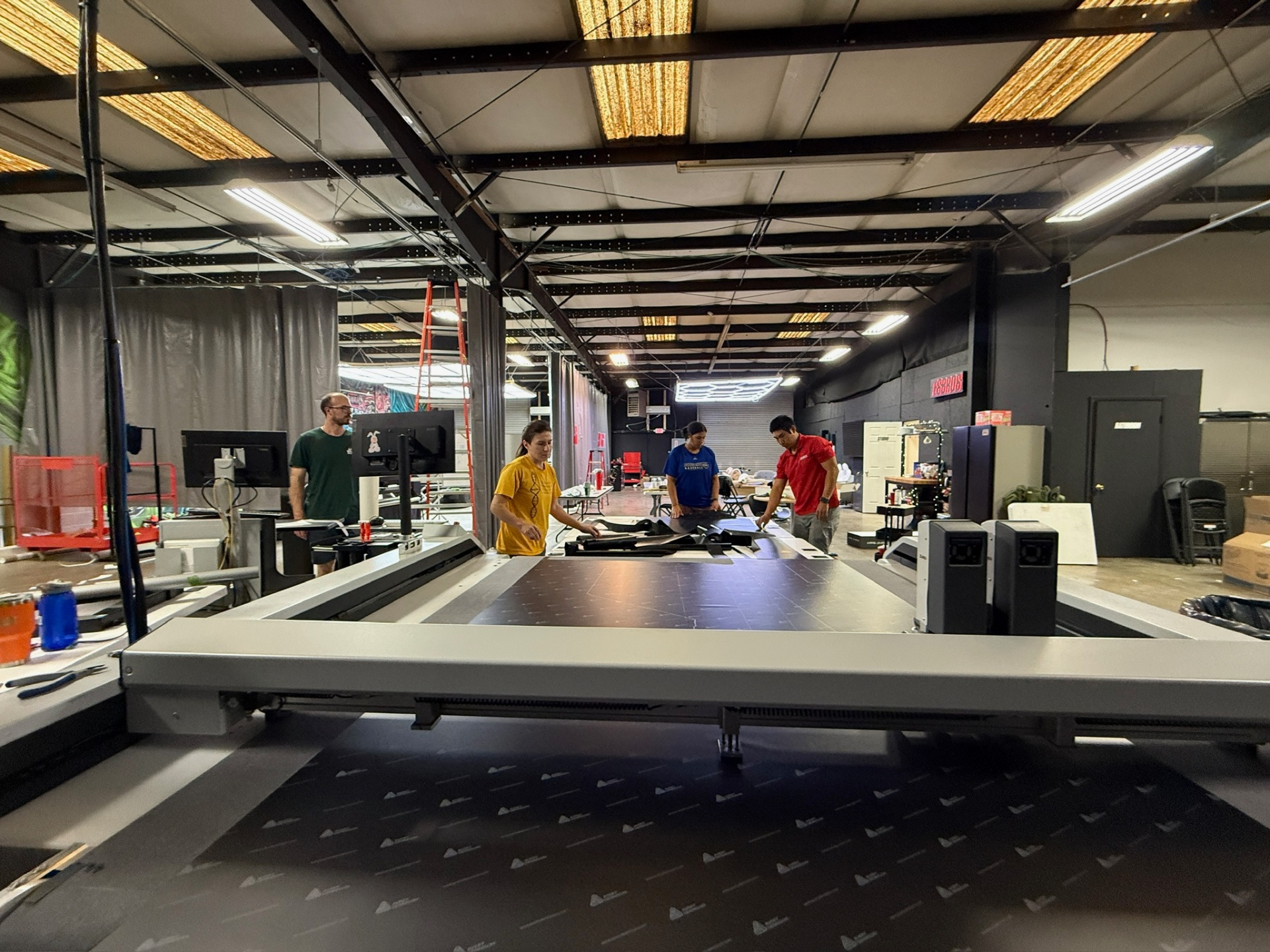
Cutting cardboard inserts in-house on the flatbed — the same panels that ship with every kit.
05
Why We Sell It
This isn't our main business. We're here to help.
We have the 3D printers and the machinery already running. This isn't our core company — but other warehouse operators kept asking, and it helps subsidize our printing costs. So if you want a kit, we'll print it and ship it.
Next up: a top-of-shelf bracket so you can label whole zones cleanly — "shelves 1–5" here, "6–10" there. It's almost done. More to come.
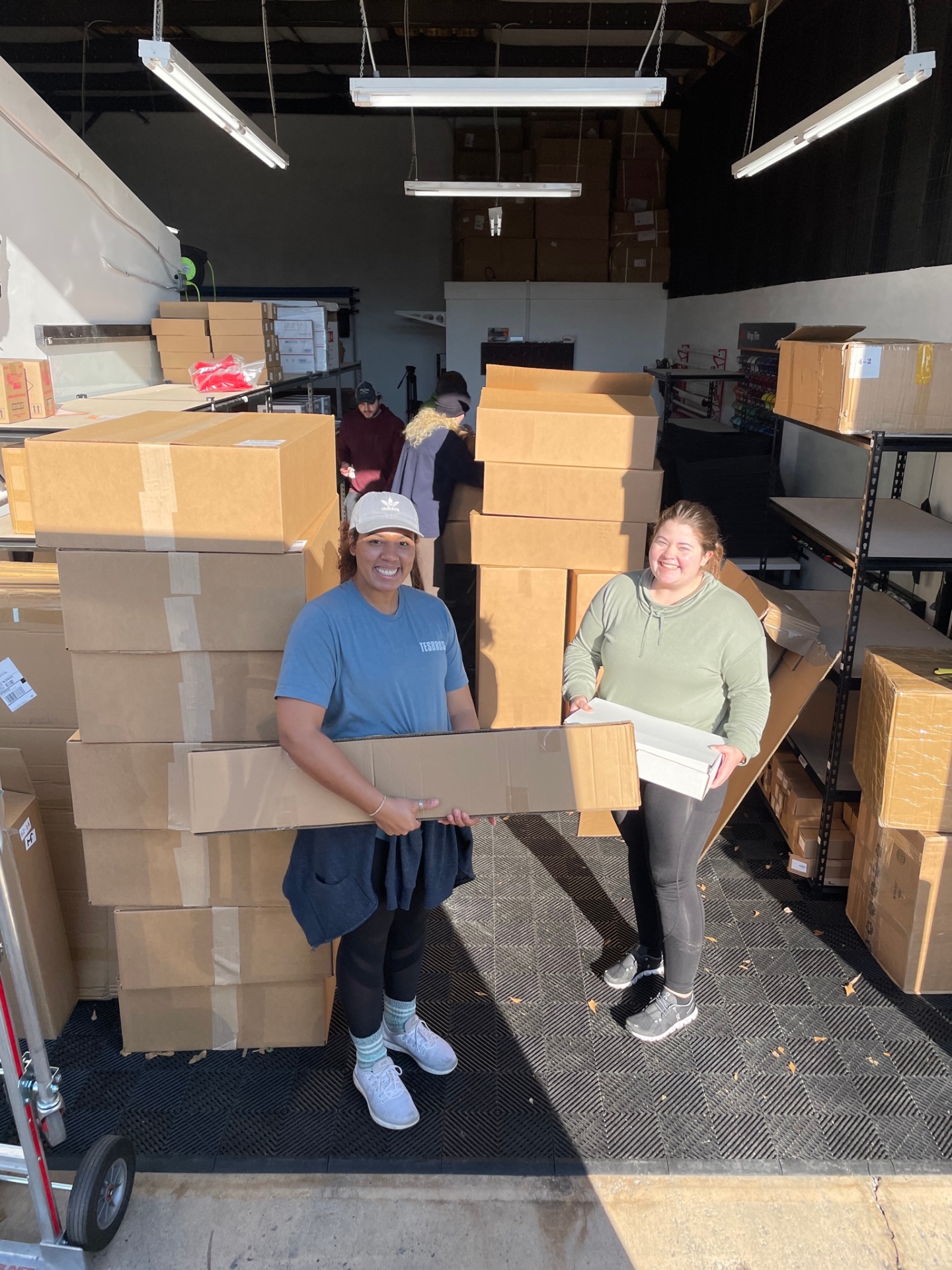
Shipping day. Kits boxed up and headed out to other warehouse operators.
Now Shipping
Get the same kit we use.
29 colors. Volume pricing from $4 down to $2.50 per clip. Cut-to-size cardboard inserts on request.